
The Oasis Reunion: why does anyone care?
An investigation

On the 28th August 2009, two hours after no-showing at the Rock en Sein festival where he and his band were supposed to perform, Noel Gallagher released the following statement:
It's with some sadness and great relief to tell you that I quit Oasis tonight. People will write and say what they like but I simply could not go on working with Liam a day longer. Apologies to all the people who bought tickets to the shows in Paris Konstanz and Milan.
Just like that, it was over. Oasis, lauded as one of the most iconic bands the world had ever seen, split like a headache. For fifteen years since, Noel and Liam Gallagher have puttered along as individuals, releasing moderately successful solo albums. Die-hard Oasis fans, their children (and sometimes even their children’s children) have used the time to imagine a utopia in which the brothers resolve their differences. Noel and Liam used the time to talk about their utter, earnest hatred for one another, employing whatever creative force that had once propelled them to write ‘‘cause after all, you’re my wonderwall’1 to instead think up new insults to describe the other including, but not limited to, ‘a man with a fork in a world of soup’ and ‘tofu boy’.
Then, on the 27th August last year, two days before the 30th anniversary of their debut album Definitely Maybe, the unthinkable happened: Oasis announced they were reuniting for a tour beginning in July and ending in November of 2025. The news was met with widespread disbelief and elation. 14 million people, in their attempts to buy concert tickets, crashed the ticket sales sites an hour before they went live. Some of the 1.4 million tickets that were eventually bought, were resold for thousands of pounds.
Over the past year, there has been endless Oasis and Gallagher-related press and fanfare. This has only become more intense in the run up to the tour itself, which began this month. At the heart of Burberry’s most recent campaign were Liam and his children (in fact, despite their lack of obvious talent or charisma, Gallagher-offspring have been given Vogue spreads, magazine covers and Oasis-themed podcasts). The Guardian, the Times, NME, the Sun, the Independent, Rolling Stone UK — all have given the new Oasis show a 5 star review.
Hello? What’s going on? Where are all the naysayers? Very few cultural commentators or musicians have been willing to rain on this parade, beyond two members of Fontaines D. C. who, upon being asked how they felt about the Oasis reunion responded: ‘I couldn’t really give a shit, to be honest’ and ‘I’m not excited about it, either […] I feel like we get caught in the last era — like ‘10s — and into such a nostalgic thing that we’re forgetting to make new things’.2 Even then, Grian Chatten, frontman of Fontaines, felt the need to clarify via an Instagram comment: ‘I love Oasis. This is not my opinion’.
Chatten is not alone in his fond feelings. Instead of ignoring the reunion of a band that broke up when they were babes in arms, many Gen-Zers have responded to the Oasis reunion with rapturous excitement, allowing themselves to be swept up in a nostalgia that isn’t even theirs, for a time they never lived in, and accepting the idea that two men in their fifties who peaked in 1996 could possibly still be dictating what is cool.
So today, I am dedicating myself to solving the mystery of Oasis: why does anyone still care? Below, I present a couple of theories:
THEORY 1: Their music is really, really good
Hah! Joking.
THEORY 2: People are willing to pay good money to watch Cain and Abel go on tour
There was always something familiar, slightly fascinating about the way the Gallagher brothers just could not stand each other. In a particularly well-edited moment from Oasis: Supersonic (2016), a documentary focused on the rise of Oasis through the ‘90s and the origins of the Liam and Noel’s feud, a dynamic is laid bare: the younger brother who likes to swagger and show off but inevitably needs the approval of his bossy, unimpressed older brother. In the clip, unearthed from some camcorder recording from 1995, the brothers are poolside. Liam is talking to the camera, but is interrupted by Noel who says, ‘say what, our kid? […] You’re looking old, these days.’ An audio begins to play over the clip, from an interview of Noel that was taped more recently, specifically for the documentary: ‘Liam was always cooler than me, I think,’ he says, ‘He had a better walk and clothes looked better on him and he was taller and he had a better haircut and he was funnier.’
It is apparently a quite vulnerable acquiescence on Noel’s part, admitting inferiority to the younger sibling who hijacked his dream of fame and rockstardom, and who he has found too annoying to interact with for years now. The video clip is still playing though, and we are still watching a younger Noel goad and irritate a wearied Liam. As if knowing that his shtick cannot fool us for a second, Noel continues smugly in his interview: ‘Liam — clearly — would have liked to have had my talent as a songwriter.’
His interview is cut off there, and the audio from the old camcorder recording is once again audible to us. Young Noel is still going. Young Liam shrugs in response to his teasing (‘you’re looking as old as I am!’ says Noel, five years his senior). Liam’s interview from 2016 then cuts in (Liam’s interviews are used much less frequently than Noel’s, who does most of the monologuing in the documentary): ‘I know Noel thinks I’m brilliant. We didn’t feel the need to pat each other on the pack and go, “oh, you’re great”. Him and me are like telepathic, you know what I mean?’ The audio from the old video comes back again. Someone says ‘kiss for the camera’. Liam shakes his head, Noel gets closer, Liam waves a hand at the camera, Noel is grinning, Liam kisses him, Noel cackles.
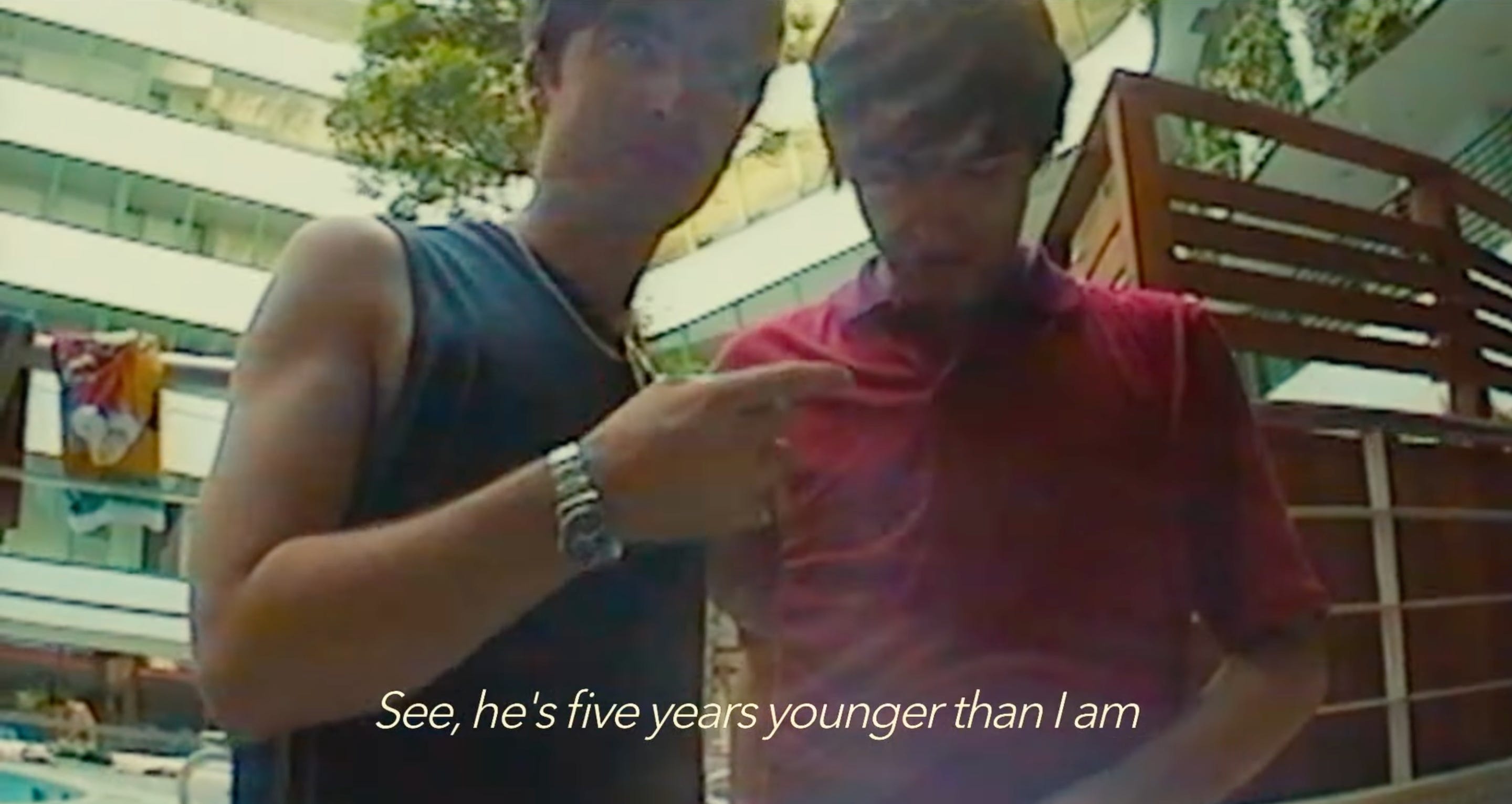
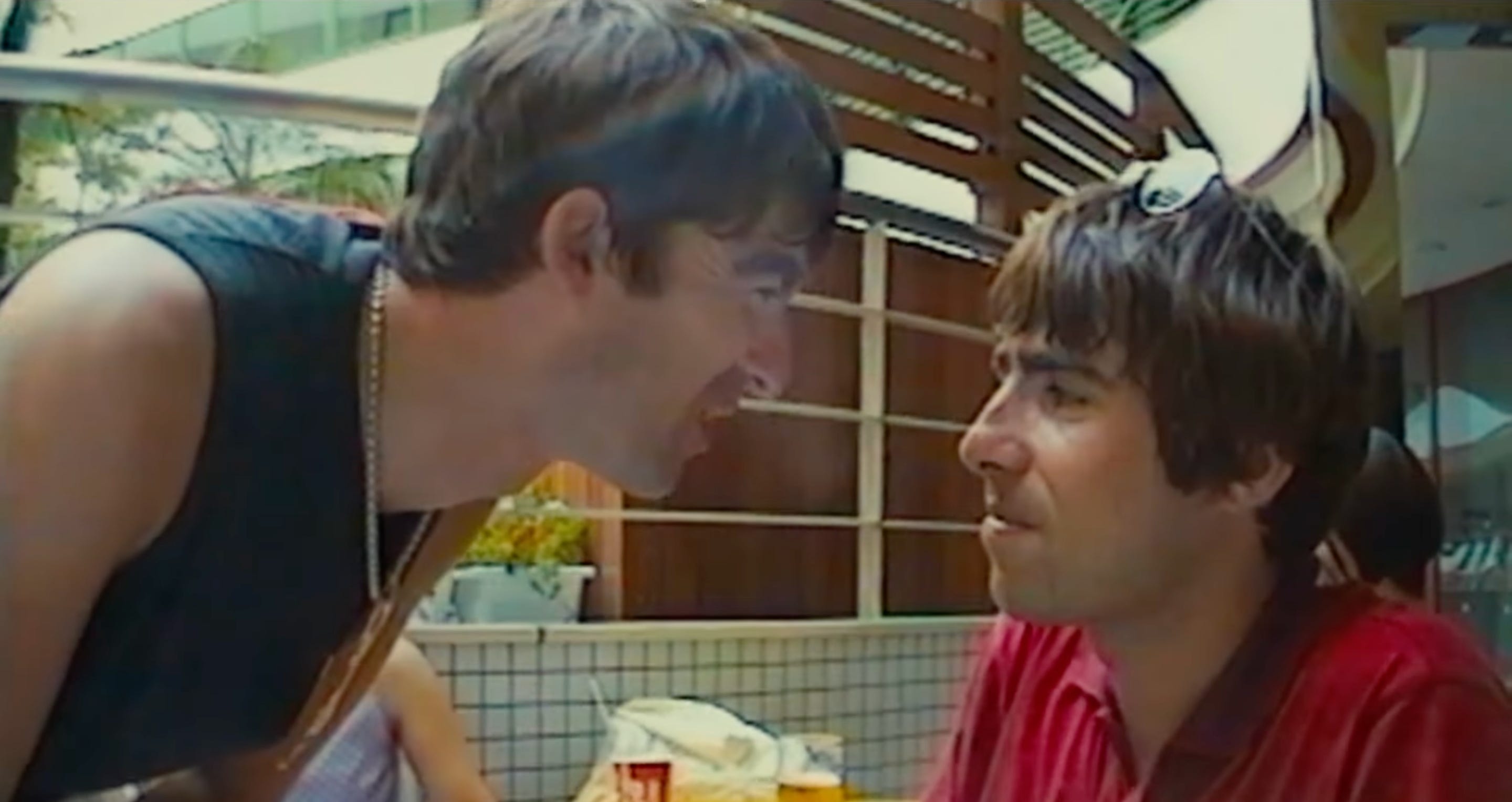
If Liam and Noel were fascinating as a sibling duo in those heady early Oasis days, it was not because their shared DNA resulted in greater musical fluency, as it so often does for musical siblings. It was more to do with the sheer antagonism and brutishness of their behaviour towards each other. From their earliest shows, there was obvious resentment: the pair fought on stage; disagreed about their band’s image, outlook, sound, style; sparred during interviews; got their head bashed in/bashed the other’s head in with a cricket bat while recording their second album.
Liam has credited the origins of their rift to an incident where he, as a teenager, did a nighttime wee on Noel’s new stereo set. Supersonic implies a deeper wound, one inflicted in early childhood when Noel, along with middle child Paul and mother Peggie, was abused by his father; Liam, for reasons neither understands, was never hit. (Their mother has noted, ‘He used to kill Noel. Noel was the one who got it most.’ On the topic of the abuse, Liam has said, ‘sometimes you’d fucking want the crack instead of having to witness it.’)
The clip of the brothers the pool was taken years before the final split, and the subsequent 15 years in which the brothers relentlessly insulted each other during interviews. In that time, the tedium and real stress of fighting with a family member have swelled into something of mythological proportions, a betrayal and tragedy of Biblical dimensions, onto which all Britons could project their own family-based anxieties. A desire for the brothers to reunite was a displacement of our desires to reunite with our lost, our dead, our unforgiving family members.
The most compelling aspect of Oasis was, perhaps, this: the tragedy of the feud, the fascination of the will-they-won’t-they (reconcile, not kiss), the identification with their rage and resentment.
Anyone interested in seeing the band with the hopes they are about to witness the beauty of familial reunion, however, are to be sorely disappointed. The reunion is less about the brothers forgetting the past than it is them briefly swallowing their anger so as to put on a series of shows that will make them astonishing amounts of money. From the shows so far, it’s obvious that the air between the brothers is less than clear, and is, in fact, filled partially by guitarist Bonehead, who seems to be acting as a physical barrier to prevent the brothers from coming too close and remembering all the things they despise about each other. Beyond a token pat on the back early doors, the two interact only slightly; once the concert is done, Liam is immediately escorted to a car and whisked away. Noel leaves separately later. For those expecting the dynamism of an onstage feud, à la Oasis in the 00s, or who were giddy at the thought of the pair once again smiling and joking as they sometimes used to in interviews, they are to be sorely disappointed. As one concert-goer has already noted, Oasis are ‘just playing song after song’.
THEORY 3: It’s the summer, not of Britpop, but of the English Rock Defence League
Younger generations who were children/unborn during Oasis’s heyday are, I think, in possession of a rather confused image of what Oasis represented in the 1990s. To them, Oasis are a band that attracted crowds of legendary proportions who, iPhone-less, were able to live truly in the moment, at a moment of national optimism when culture was exciting and fresh in Britain, and the socio-political landscape seemed far less depressing.
(I genuinely think this joyful, lighthearted image of the band has been been given further weight by the fact that, for many young people, their first encounter of the Gallaghers may have been through Liam Gallagher’s tweets, which are jovial, carefree, playful etc:)
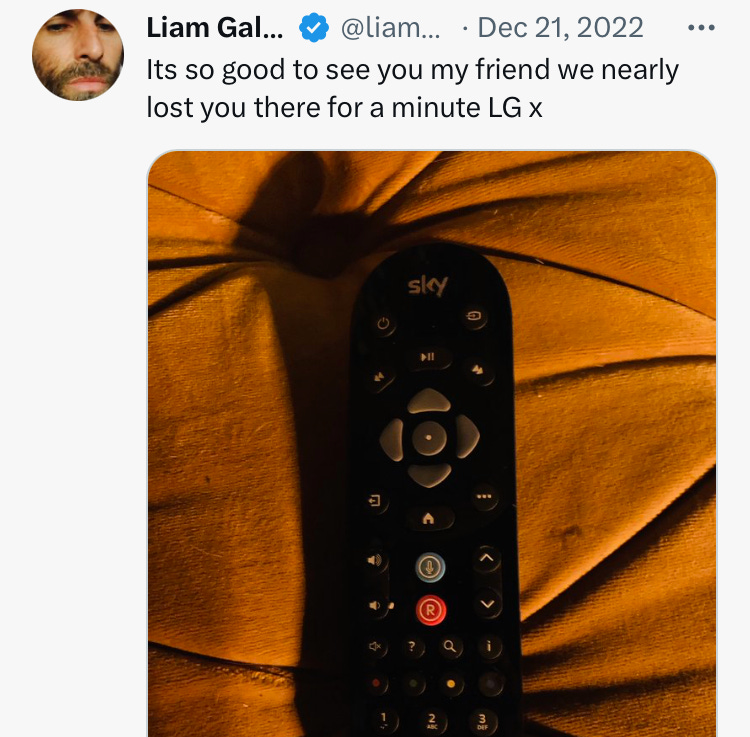
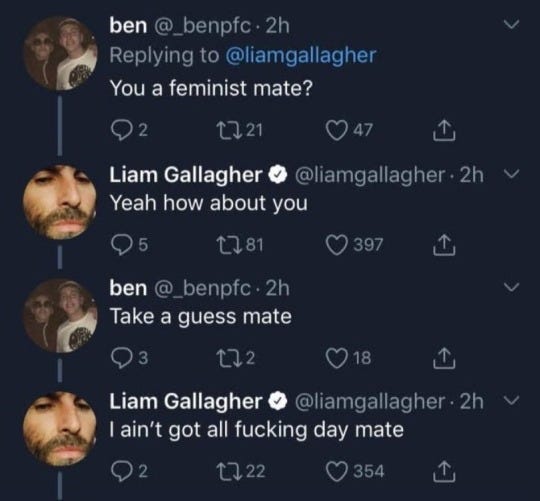
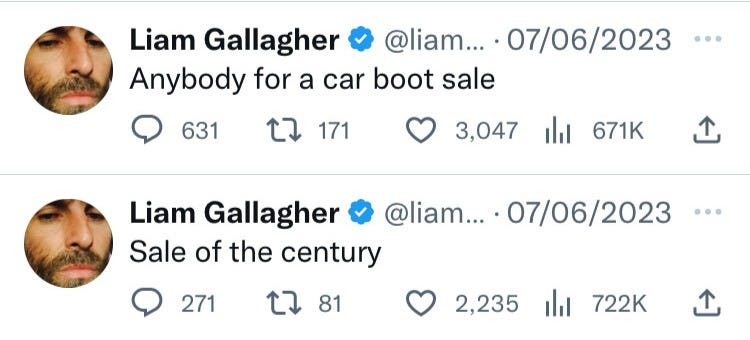
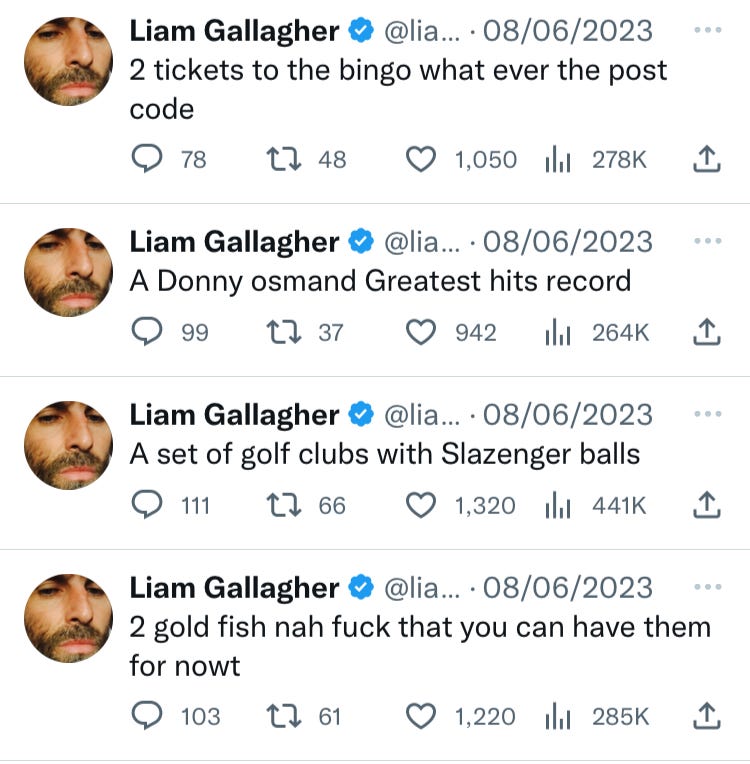
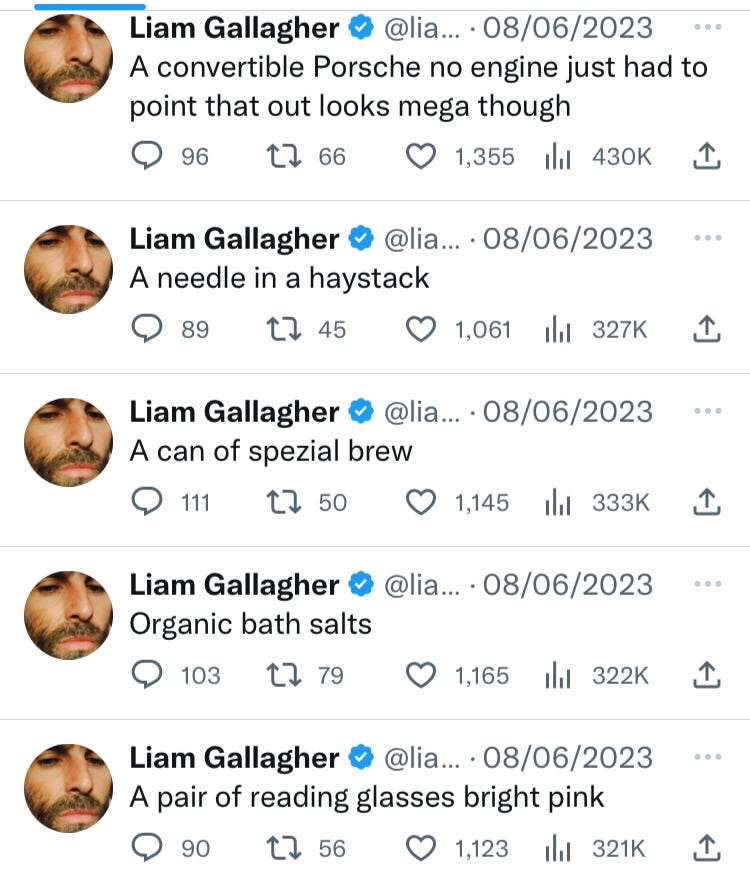
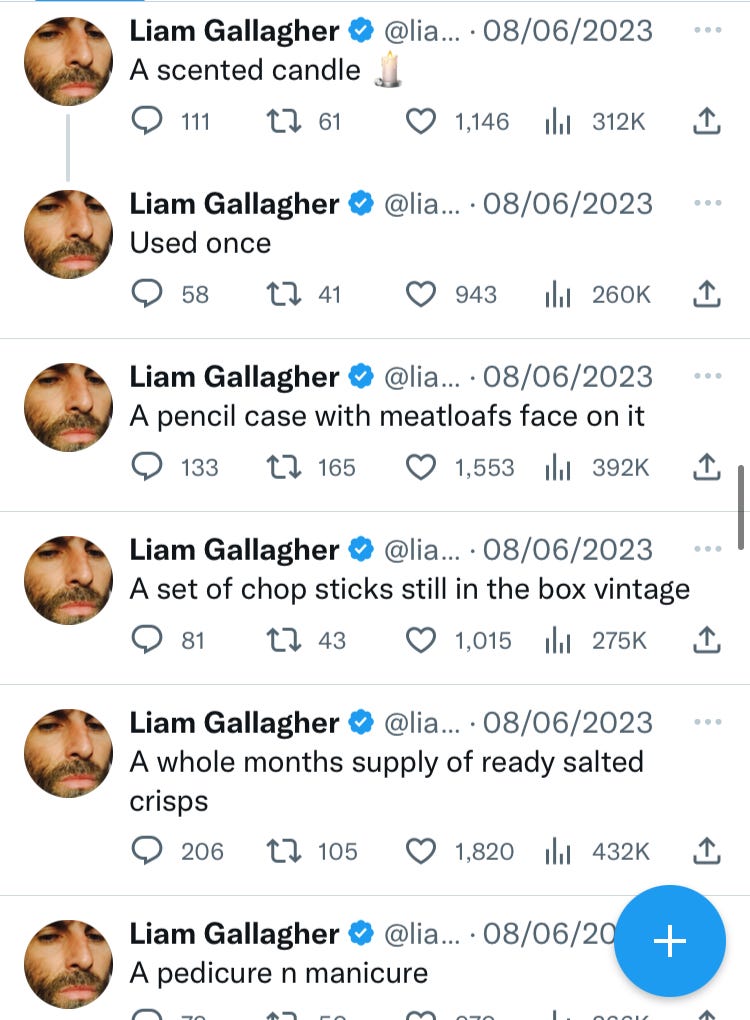


You watch about two old Oasis interviews, though, and it doesn’t take long for a pattern to emerge. Here are some things that Oasis advocate for: laddishness, lairiness, alcohol and cigarettes, drugs, football, The Beatles, The Rolling Stones, ‘getting back’ to ‘real rock ‘n’ roll’, the Union Jack. And it is not just each other that Gallagher brothers cannot stand, the list of things they disapprove of is almost endless, but includes: jazz, poetry, novels, hip-hop, geezers in makeup, Jay-Z and Beyoncé, women writing songs about social issues, woke snowflakes.
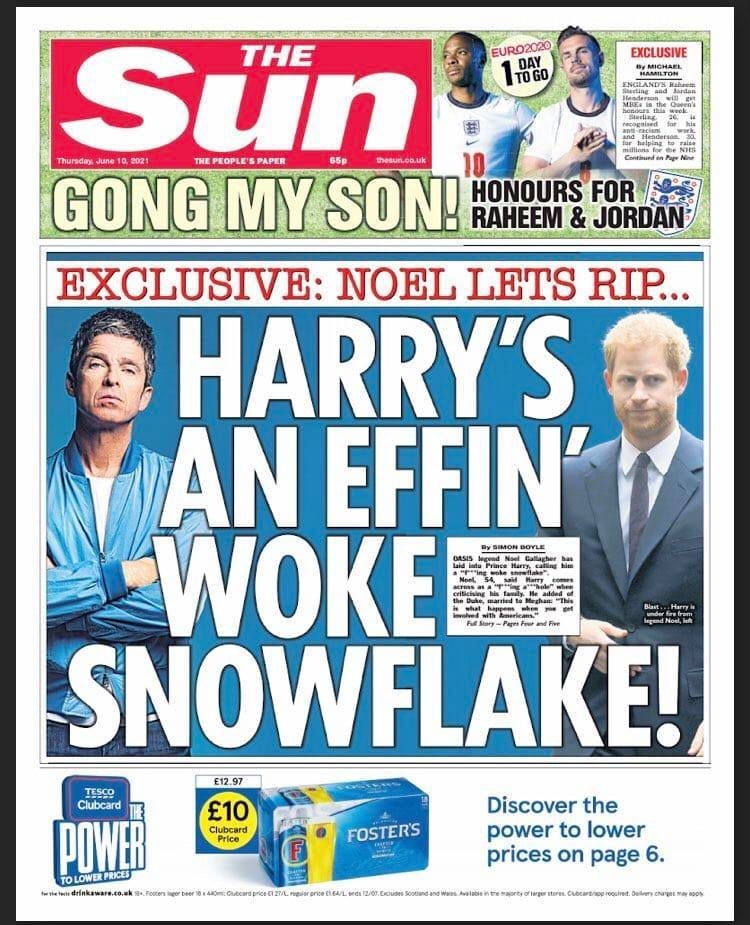
I’m not being facetious. These are all real things that one member of Oasis or another have expressed a like or dislike of at some point since the band was formed in 1991, and this is what our generation is at risk of forgetting: Oasis were a palpably conservative band. Conservative in sound, constantly preaching their strict, narrow-minded ideas of what constitutes proper rock ‘n’ roll (definitions which noticeably exclude the black musicians who invented the genre). Their own music was a predictable pastiche of what had come before them; they were less about reinventing the wheel than they were about putting on a pair of stabilisers. Their ideas and opinions were also conservative, especially the ones about how music and culture had apparently gone too far, become too strange, effeminate, experimental. By emulating the past, Oasis would be a steadying influence.
Then there’s Britpop, a moment in British pop culture that was ostensibly about celebrating British identity through music and culture, a reaction against foreign/American influences. It also served to make patriotism cool to the younger generation, and Oasis, for their part, took this endeavour seriously. They performed with their stage set, instruments and clothes literally awash with the colours of the Union Jack, assuring the British public that they were taking Britain back in time, to a period of real greatness. If this description is starting to make you feel uncomfortable, or your eyebrow is raising, or your palms are itching to throw a milkshake at Farage, then: good. It shouldn’t be too tricky to pick up on the dogwhistles sneaking in here. Because, let’s be honest, when patriotism is combined with nostalgia in Britain, it is really trying to get at one thing, pose a singular question: wasn’t it great in the past, back before all these foreigners sunk their grubby little teeth into the neck of this great country?
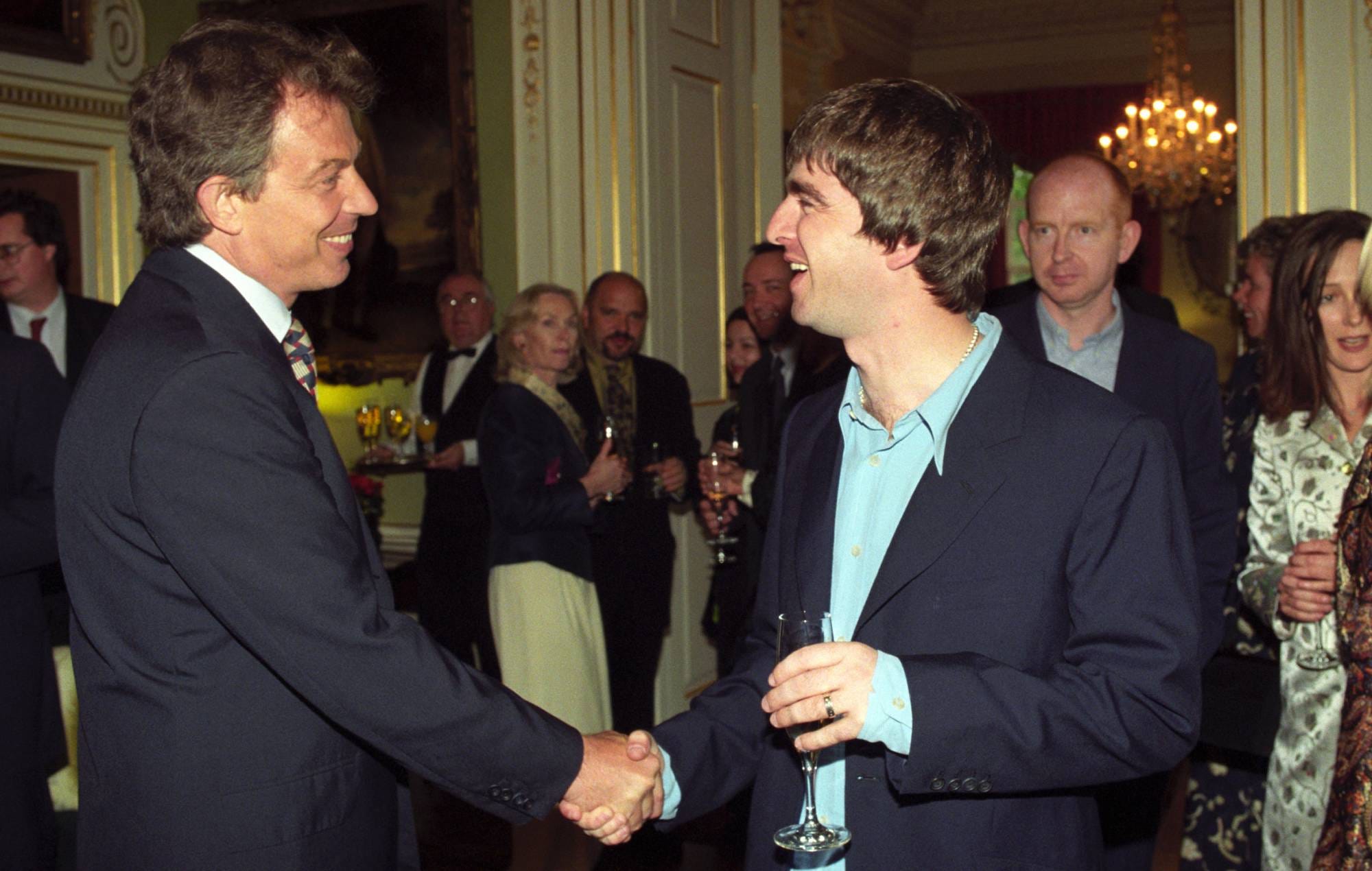
It is really the late music critic Neil Kulkarni who, in an interview, said it best:
For me, my memories of this era [the 90s], and thinking about this era now, is that Definitely Maybe and Oasis meant […] the proper homophobic, mildly racist lads taking over. It meant the rejection of ‘poufiness’, stylistically, and the reassertion of the kind of English Rock Defence League’s tiny-minded ideas about real, proper music. It’s just rock regressing into pure, soulless pastiche. It also meant, in this period, a cowardly, craven press surrendering any critical standpoint in fear of this supposed consensus, national broadcasters and publishers boosting the “lads”, the coked-up and the lairy. And, deeper than that, it meant a reassertion of quite racist and sexist music stereotypes and snobbery. […] It enabled also a middle class media, to homogenise its ideas about what counted as working class art. Ever since then, ever since the ‘90s, when I’ve slagged off Oasis or the Roses or any of those bands,3 I’ve had it back: ‘oh, you must hate the working classes’ as if this is all the working classes can do, this kind of thing.
Since breaking up, Noel has repeatedly professed opinions — like that he will not stand for ‘hip hop at Glastonbury’; or that female artists only express their opinions about social issues to hide the fact that their music isn’t very good; or that he sent his kids to private school because he doesn’t want them ‘coming home talking like Ali G ‘; or that people who wanted to overturn the Brexit outcome were fascists — that make it clear what kind of crowd he slots seamlessly into: not necessarily the one that was out on the streets last summer, punching brown people and trying to burn down hotels filled with asylum seekers inside of them while claiming they were taking their country back, but certainly the ones who watched from their homes, Facebook open on their phones, saying things like, ‘they have a point’ and ‘this is what happens when you don’t listen to people’.
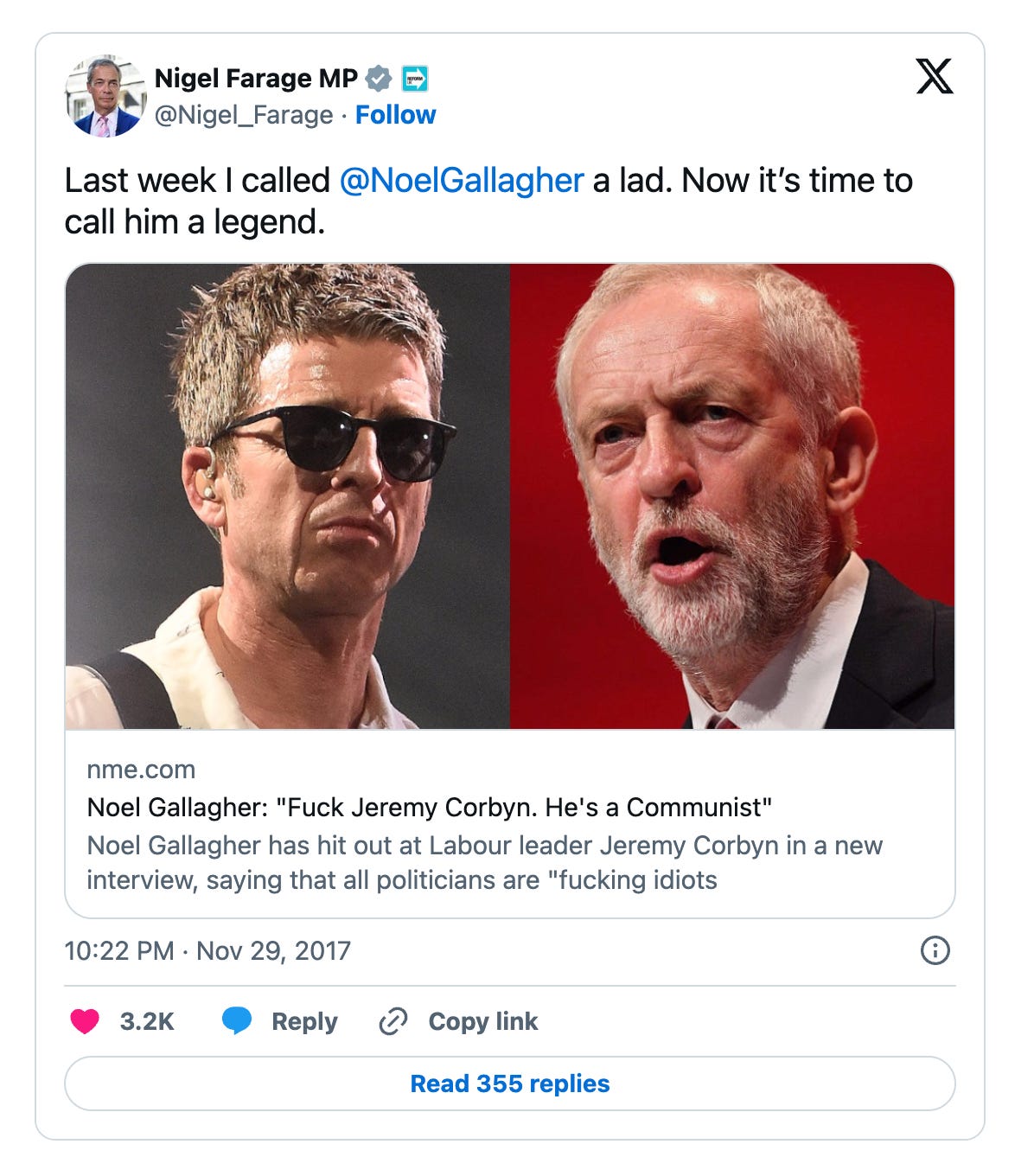


I don’t think it’s a coincidence that Oasis have reunited, and captured the country’s imagination, in this particular political landscape. After decades of a Conservative government encouraging a ‘hostile environment’ for immigrants and foreigners, the media regularly platforming Nigel Farage until he managed to get himself a seat in parliament, and a Labour Prime Minister describing an immigrant-friendly Britain as an ‘island of strangers’ in language that echoed Enoch Powell’s famous, and famously racist, ‘Rivers of Blood’ speech, Britain is rife with racism and all kinds of phobias. The Oasis reunion was announced at the end of a summer where far-right demonstrators tore through parts of the UK, and brown and black people were not comfortable to leave their homes for days. It has been taking place alongside further anti-immigration riots in Essex. At such a time, it makes sense that the greatest cultural event of the year would not be from a new artist responding to the current moment, but instead a nostalgia-fest from two old men who have always promised to take this country ‘back’ to when things were ‘great’.
IN CONCLUSION: Nostalgia will kill you
Nostalgia, like any form of narrative, is always ideological: the past it seeks has never existed except as narrative, and hence, always absent, that past continually threatens to reproduce itself as a felt lack. Hostile to history and its invisible origins, and yet longing for an impossibly pure context of lived experience at a place of origin, nostalgia wears a distinctly utopian face, a face that turns toward a future-past, a past which has only ideological reality.
— On Longing, Susan Stewart
Oasis, like the moment they belong to in British history, lend themselves well to narrativising, and I don’t blame their fans for being eager readers all these years, scanning their interviews and tweets for signs of imminent revival.
Nor do I think everyone who likes Oasis or has bought a ticket to their show is an ignorant bigot. I do, however, think they are victims of nostalgia, both a useless and harmful force, desperate to relive a past that never existed in quite the way they imagine it did. You can waste your whole life away like this, making yourself sick for what is already gone, rejecting anything that is strange, new, or exciting. You can build a national movement on it, too, but it would be foolish to expect anything back from it except disappointment, a restricted and restrained culture, and endless misery.
I know Noel wrote ‘Wonderwall’ alone. Please don’t assume you know more about Oasis than a girl who is spending her summer writing about how everyone should care less about them.
Liam Gallagher went on a Twitter tirade after these comments, calling the boys of Fontaines D.C. poorly dressed ‘spunkbubbles’. I think the Fontaines boys seem lovely, so it pains me to admit that their styling over the last year or two has been absolutely bonkers (and not in a good way). Then again, Noel Gallagher is always knocking about in a denim shirt buttoned to the TOP. So maybe Liam should get his own house in order before he starts pointing fingers.
Kulkarni slags off Oasis most beautifully in this piece from his Substack. Basically mandatory reading if you find even one iota of this post interesting
https://thelastchord.substack.com/p/review-oasis-reunion-2025-a-night